Books by Terence W. Beckwith
A three-part series examining why projects fail, why failure persists, and how AI might help.
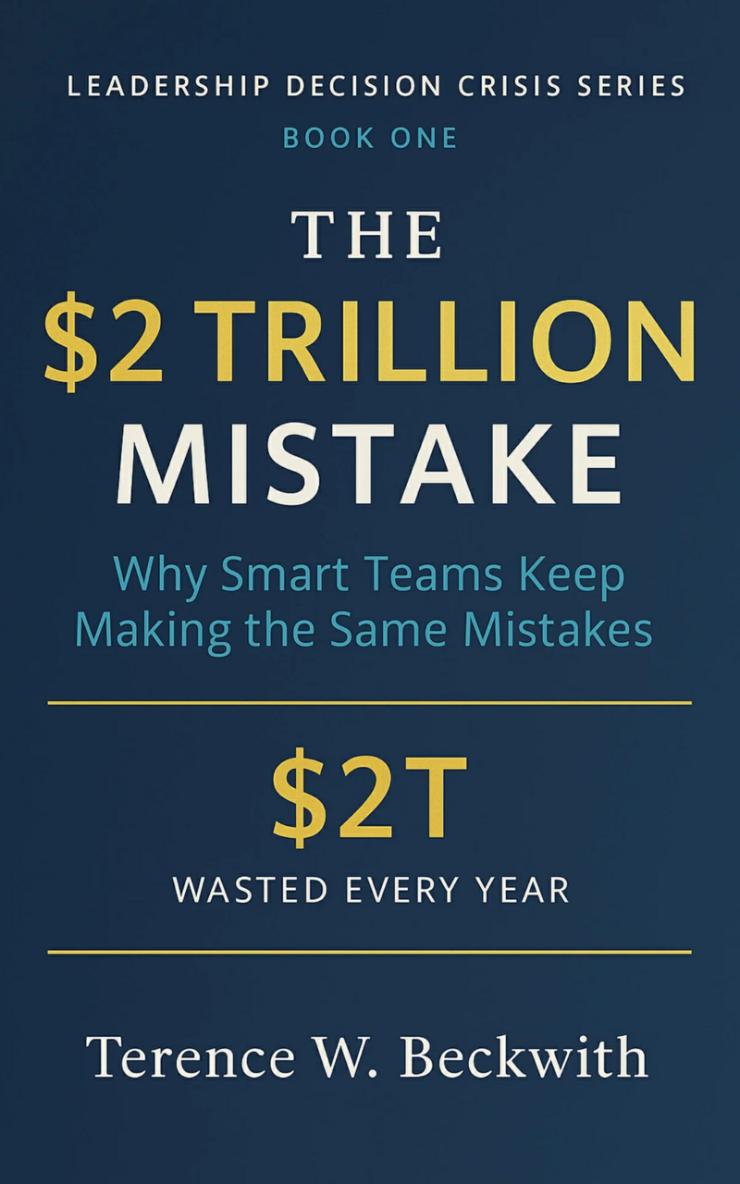
The $2 Trillion Mistake
Why Smart Teams Keep Making the Same Mistakes
The first volume explores the cognitive biases that cause project failure. Drawing on PMI research and behavioral economics, this book reveals why intelligent, well-intentioned teams consistently fall into predictable traps—and why traditional solutions don't work.
- The 8 cognitive biases that sabotage projects
- Why "the right people" strategy fails
- How incentive systems punish success behaviors
- The $2 trillion annual cost of project failure

The Persistence of Organizational Failure
How Decisions, Incentives and Governance Make Failure Self-Sustaining
The second volume asks the harder question: Why do these patterns persist even after we understand them? This book examines the structural forces—governance, incentives, and decision environments—that make organizational failure self-sustaining.
- Why knowing about bias doesn't prevent it
- How governance structures reward failure signals
- The role of incentives in suppressing early warnings
- Decision environment design principles
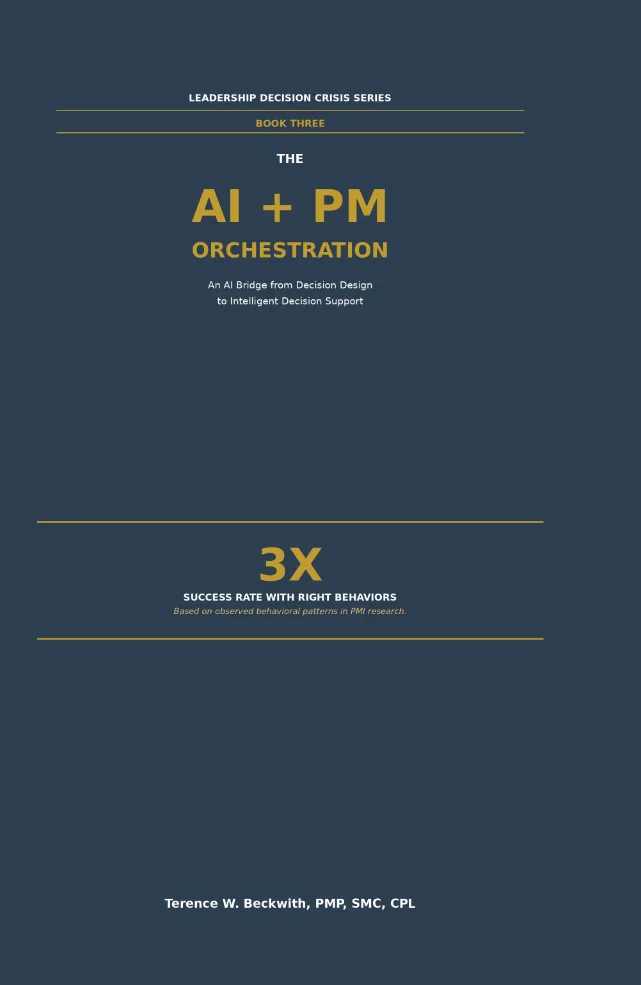
The AI + PM Orchestration
An AI Bridge from Decision Design to Intelligent Decision Support
The final volume bridges decision design and decision intelligence. This book explores how artificial intelligence can be used to instrument decision environments—making bias visible, risk accumulation measurable, and critical signals harder to suppress.
- From decision design to intelligent decision support
- The PM NeuroPilot research framework
- 8-bias detection methodology
- Validation approach and research commitment